
Review – Bartók Piano Works – Alain Planès
As this is the first occasion on which I have had the privilege of offering a Review for the Les Aldrich Website, I thought I would set out the basis on which I will review the music I am given.
My intended reader is definitely not an avid reader of Gramophone magazine, or the “Just a Minute Crew” who enjoy reviews and analysis about whether a musician has deviated, hesitated or repeated in Bar 7 of the Coda.
Instead, I want to encourage people who have yet to cross the road from the traditions of the Classical and Romantic eras into the modernity of the 20th and 21st century.
This Bartok CD is an excellent starting point, as, in many ways, it is a bridge between the lyricism of the old and the uncertainties of the new.
However before I Review the actual CD, I want to create some reference points. Where might one naturally start to explore 20th century virtuoso Piano? The iconic and best known CD is that from Maurizio Pollini, Deutsche Grammophon, offering Stravinsky’s Petrushka, Prokofiev’s extraordinary 7th Piano sonata and other music by Boulez and Webern. I think it is fair to say that this is the Gold standard of 20th Century piano playing. The Prokofiev 7th Sonata is without doubt the most extraordinary, exciting and exuberant performance of demonic, percussive piano, I have ever heard. The other protagonist who has helped me into the garden of 20th century piano genius has been John Lill, with his wonderful, evocative and accessible Prokofiev Piano sonatas -Volume 3 with Sonatas 7, 8 and 9 being my suggestion.
So now the question is: “How does Bela Bartok’s Piano music, and his latest advocate – pianist Alain Planes, compare as an entrée into 20th century solo piano?”
This CD offers much for the intrepid explorer. Planes’ includes both the beautiful and the startling. The Andante of the Fifteen Hungarian Peasant Songs might leave one wondering if we are back in the era of Chopin and Brahms.
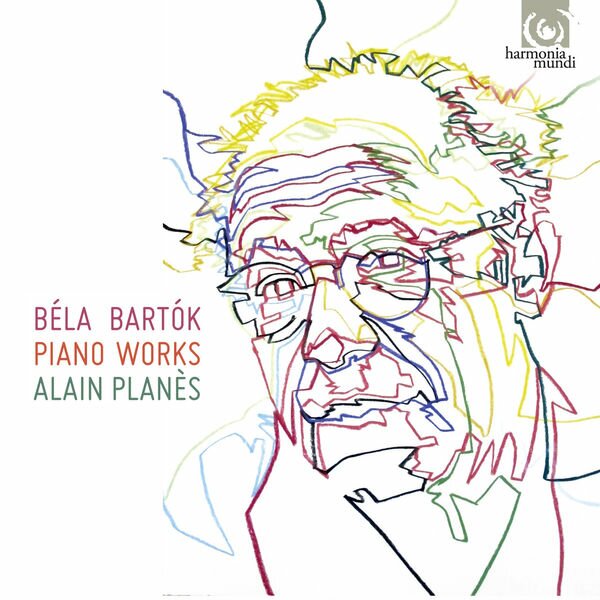
In complete contrast, The Dance Suite, with its jaunty opening, soon reminds us that all is not well in the garden of lyricism. The second movement, (Track 2), has a staccato sound that has resonances of Stravinsky’s Petrushka. Indeed Stravinsky spent much of his career denouncing Bartok’s obsession with folk music, before confessing, towards the end of his life, that his own music had been similarly influenced.
The Piano Sonata, composed to celebrate the unity of Buda and Pest, also is also steeped in the folk songs that were so important to Bartok.
Of the Six Romanian Folk Dances, the dance from Bucsum bears nostalgic witness to its Jewish roots.
The CD is a wide ranging introduction to the new musical world that Bartok inhabited, and comforts us with the more traditional. As part of a wider exploration of 20th Century Piano music, this CD offers important insights and vignettes. We are in the hands of a true Bartokian Pianist, and this increases our enthusiasm for the journey.
Further 20th Century Piano, including Bartok
Bartok Piano Concerto no 3 (with Prokofiev’s piano concertos 1&3) played by Martha Argerich and conducted by Charles Dutoit – EMI Classics
Bela Bartok Piano Works. Pianist Alain Planes
- Dance Suite Sz 77
- Fifteen Hungarian Peasant songs Sz 71
- Four Old Songs
- Piano Sonata Sz 80
- Six Romanian Folk Dances Sz 56
- Fourteen Bagatelles Op 6 Sz 38
About James Adley
