
Review – Handel Tamerlano – Xavier Sabata
The seemingly inexhaustible Handel opera bandwagon continues to roll with this new recording of Tamerlano. A collaboration between French label Naïve and the production company of Vienna-based countertenor Max Emanuel Cenčić, it is timed to coincide with the recent launch – at the opera house of the Palace of Versailles, no less – of a series of concert performances by largely the same cast; in the autumn the roadshow visits Cologne, Hamburg and Vienna, and, in January 2015, Krakow.
Tamerlano, first performed at London’s King’s Theatre in 1724, is one of Handel’s most ambitious and sophisticated operas. It is unusual in the composer’s canon for the star status accorded to the tenor. In recent years, even the ever-questing Plácido Domingo has assumed the role of the captive Ottoman sultan Bajazet (historically, Bayezid), composed for Francesco Borosini – a native, like another tenor idol of the late 20th century, of the city of Modena. Borosini was perhaps the first tenor in history to acquire international star status, and Handel ensured that he was in the most prestigious of company: the castrato Senesino, the toast of London and a rival for Farinelli, took the virtuoso role of the politicking Greek prince Andronico, with the tempestuous diva Francesca Cuzzoni as his love interest (and Bajazet’s daughter) Asteria – a character who seems to presage the formidable Odabella in Verdi’s Attila.
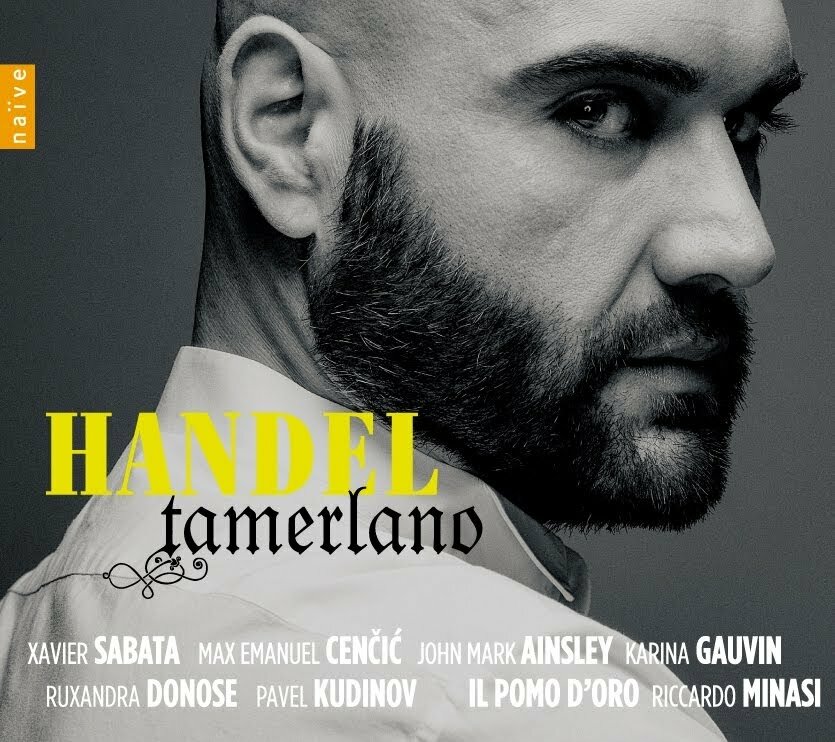
Another castrato, Andrea Pacini, created the title role of the wilful Turkic conqueror otherwise known as Timur or Tamerlane. He is embodied in this recording by the Catalan countertenor Xavier Sabata, who last year released an album on the Aparte label called Handel: Bad Guys. Tamerlano is not exactly a good guy, but Sabata (like Handel) doesn’t believe in painting his characters in black and white, and his mellow tone and elegant phrasing lend a sensual, feline menace to the Central Asian warrior. As Andronico, Cenčić, with his fuller and more penetrating sound, is more overtly ferocious in his brilliant Act II aria ‘Più d’una tigre altero’ – but his Italian sounds stilted in the eloquent accompanied recitative before his Act 1 aria ‘Benché mi sprezzi’. If some distinctly Anglo-Saxon pronunciation compromises John Mark Ainsley’s Bajazet, he brings captivating warmth and nobility to the role – not least in his dying moments, another accompanied recitative, but strikingly free in form. As Asteria, Karina Gauvin upholds her reputation as one of the world’s finest Handel sopranos, though she now sounds less succulent than on her gorgeous album of operatic and sacred arias released on the Canadian Atma label five years ago. Mezzo-soprano Ruxandra Donose makes a velvety and dignified Irene (Tamerlano’s spurned betrothed) who finds a staunchly and richly voiced advocate in the Leone of the bass Pavel Kudinov.
Under the dynamic baton its director, Riccardo Minasi, il Pomo d’Oro sounds nothing less than thrilling, with strings that can scamper, throb and clatter, and oboes that both can both coo and call to arms, complementing and amplifying the characters’ struggles of power and love.
Handel: Tamerlano
Xavier Sabata (Tamerlano), Max Emanuel Cencic (Andronico), John Mark Ainsley (Bajazet), Karina Gauvin (Asteria), Ruxandra Donose (Irene), Pavel Kudinov (Leone) Il Pomo d’Oro, Riccardo Minasi
Naive V5373 (3CD)
About Yehuda Shapiro
